Product & Marketing Strategist

I design the thinking behind products, then build them with AI and human judgment.

I work upstream of the build. I frame the real user problem, fit AI into the workflow, and shape how the product is positioned. The two projects below show how I think, not just what I shipped.

Problem framing AI workflow design Product thinking Positioning & messaging
How I think

Frame the problem before reaching for the solution.

I'm a marketing and product strategist with an MS in Marketing from Johns Hopkins Carey and a background in planning at McCann Worldgroup. What sets me apart is how I use AI: to think better, not just produce more. I use it to turn ambiguity into clear workflows, pressure-test ideas, and keep human judgment on the final decision.

Most products answer the wrong question well. I start with the user's real friction and the assumptions everyone skipped, then work out where AI fits, how to route the work, and how to position the result so its value is obvious to the person choosing it.

SubletU and FOVRA are the two halves of how I work. One is a two-sided marketplace built on a concrete, under-served pain point. The other is a system for making AI dependable enough for serious work. Both started as a problem I could name before I could solve it.

AI Workflow Design

Structuring research, drafting, critique, and QA into routed workflows, not one-shot prompts.

Product Thinking

Scoping the MVP to its wedge and resisting complexity that doesn't earn its place.

User Problem Framing

Naming the real friction and the unspoken assumptions before committing to a build.

Positioning & Messaging

Making the value impossible to miss for the person who has to choose it.

● 01 · Two-Sided Marketplace

SubletU

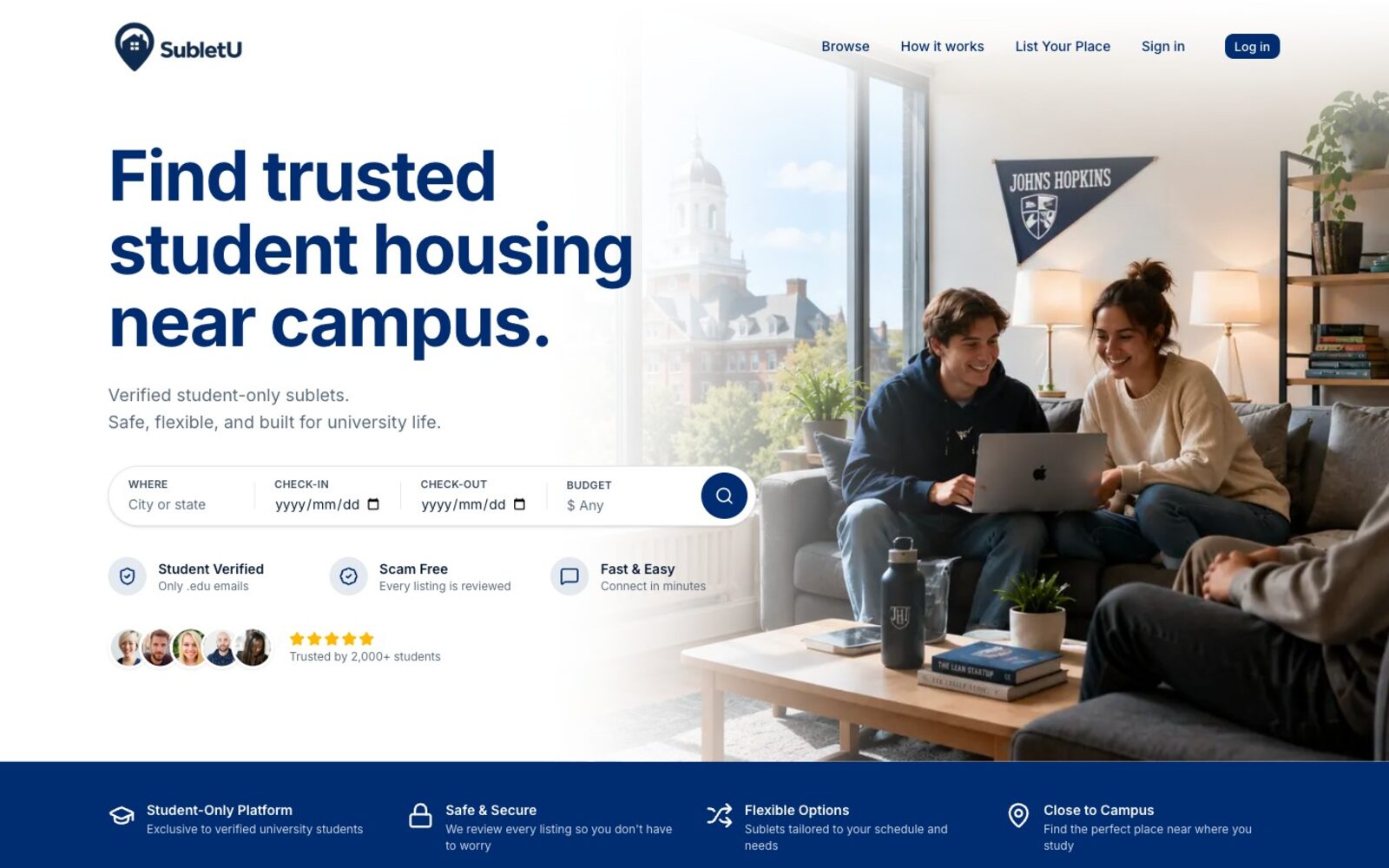
A student subletting platform that closes the gap between 12-month leases and a 9-month academic year.

Visit SubletU
◆ Problem

Students pay for months they don't live in.

Leases run 12 months; school runs about 9. Students either eat the cost of summers they're not there, or scramble to sublet through chaotic group chats where listings are inconsistent and scams are common.
◆ Insight

The problem isn't supply. It's trust and friction.

Sublets already exist; what's missing is a verified, legible channel. Students move quickly when they trust the counterparty. The right move is to standardize and verify, not add another open marketplace to scroll through.

◆ Solution

A verified, student-only marketplace built for trust and speed.

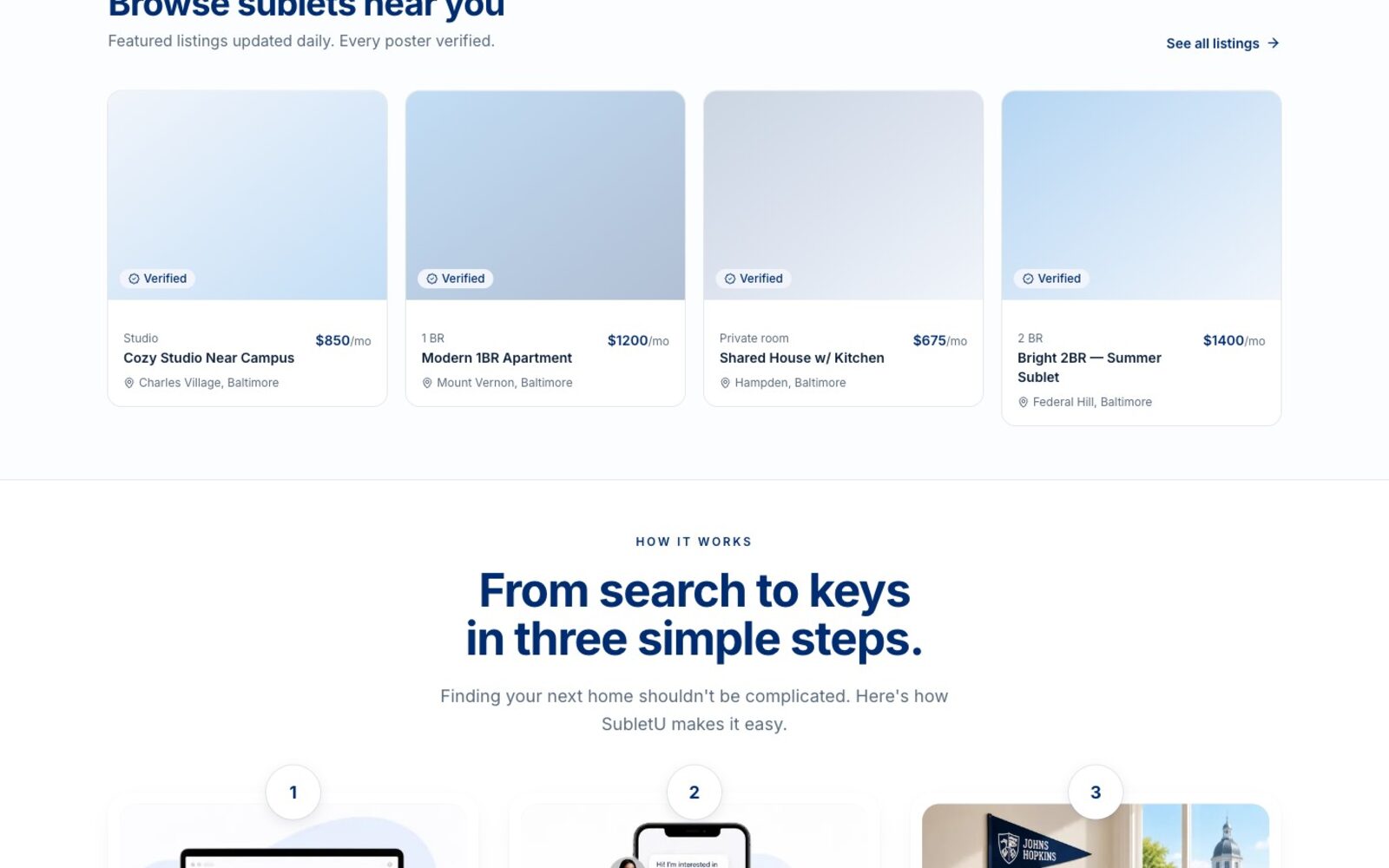
SubletU keeps the network to verified students, standardizes how every sublet is listed, and cuts the time it takes to match. A stressful, scam-prone scramble becomes a clean, predictable process.

◆ What it does
  • .edu verification. A student-only network that filters out strangers before the first message.
  • Standardized listings. Every sublet captures the same fields, so renters compare like for like.
  • Smarter matching. Pairs sublets to seekers by dates, budget, and fit, which cuts search time.
  • Reviews and reputation. Two-sided trust signals, so students know who they're dealing with.
  • Ready-to-use templates. No blank-message barrier, and faster agreement.
◆ My Role

Product & marketing lead

Framed the core problem, defined the MVP, made trust-and-verification the wedge, and used AI to pressure-test the user problem and sharpen positioning for a student audience.

◆ The thinking

Solve for trust first, features second.

The hard part of a marketplace isn't listings. It's getting strangers to trust each other quickly. I built the product around that single problem and relied on verification, structured listings, and reviews instead of a long feature list.

◆ How it was built

A positioning earned through two-stage market research.

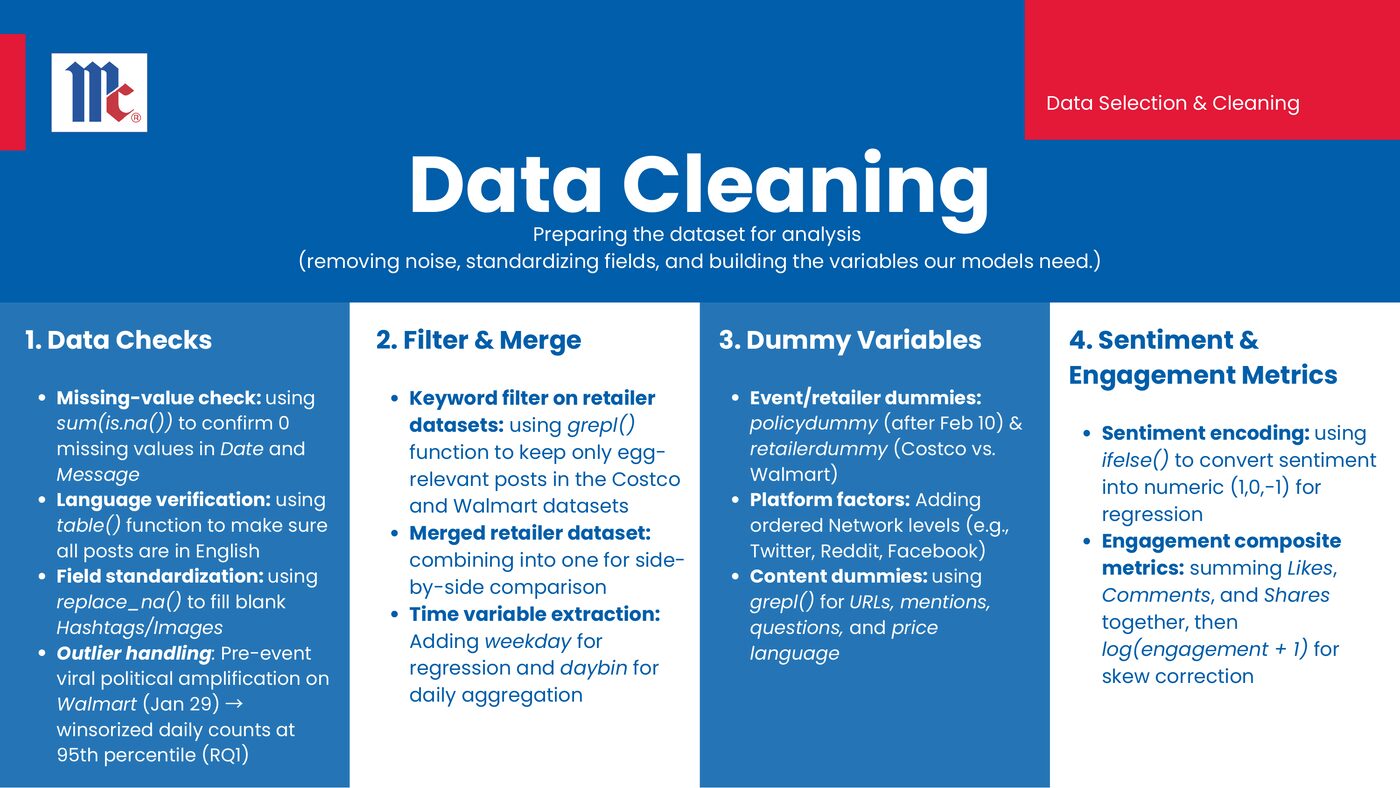
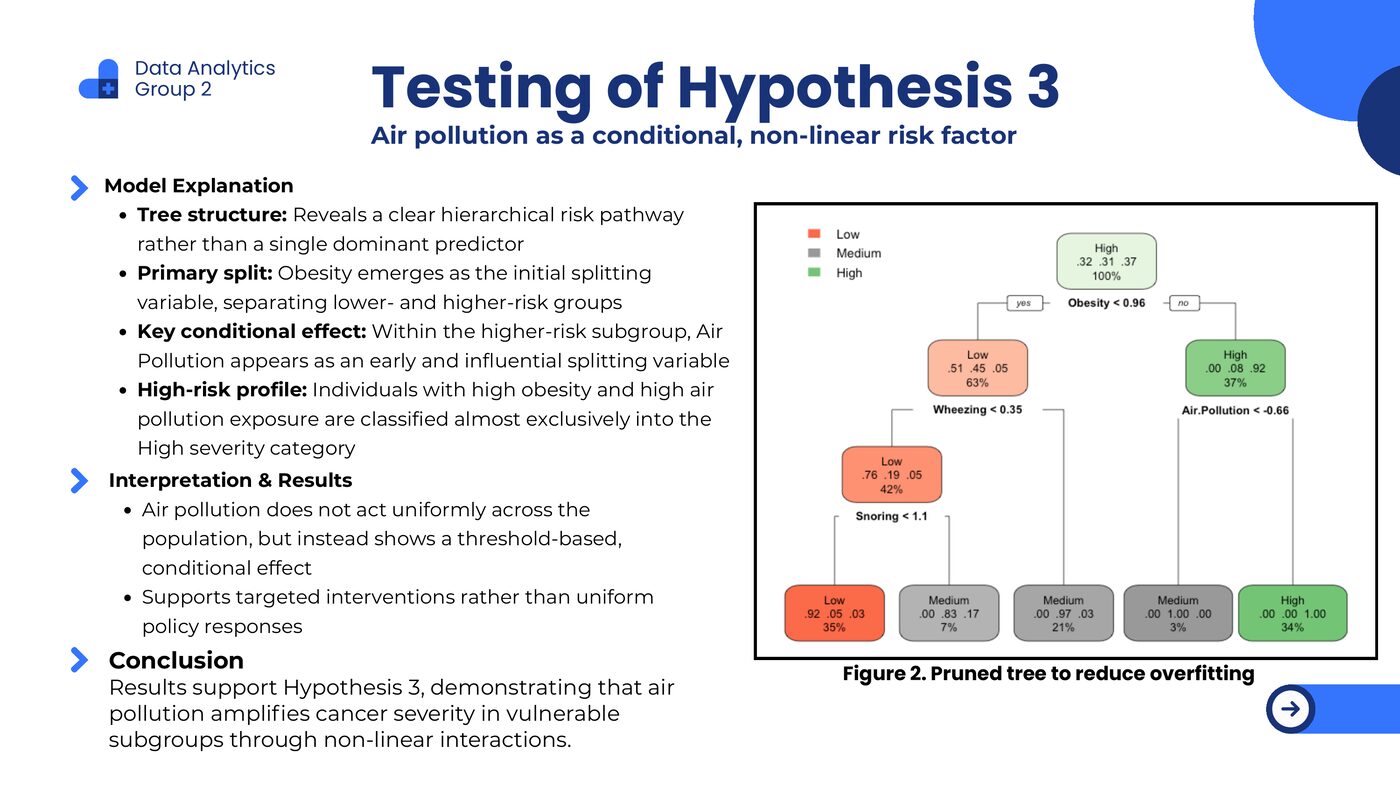
The verified-student angle wasn't a guess. It came out of a structured, AI-assisted research process that pressure-tested the idea, with human judgment on the final call, before any product was built.

Stage 01 · Strategy

Step-back prompting

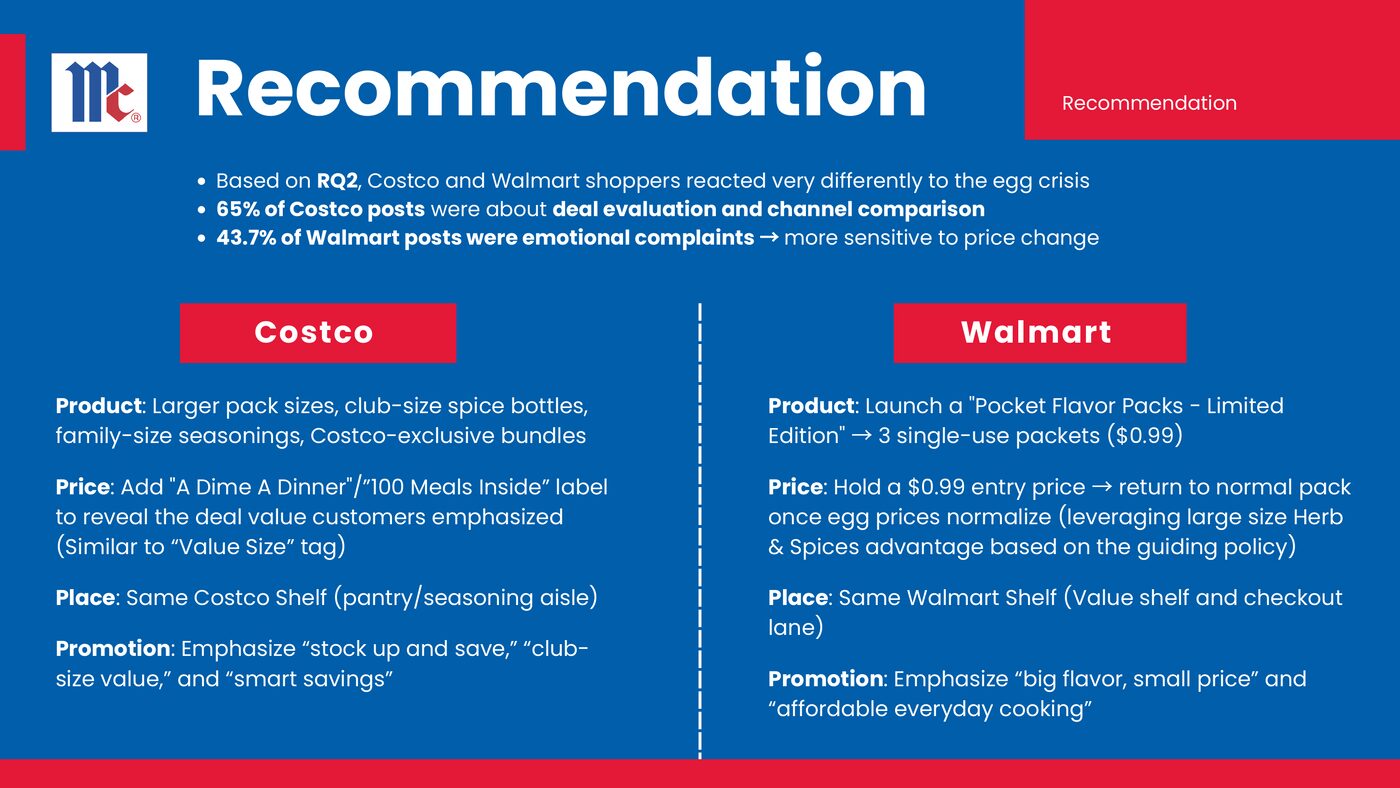
Instead of asking AI for positioning directly, we first mapped the functional, emotional, and social needs that Craigslist and Facebook Marketplace leave exposed for students. From there we generated six positioning concepts and chose the trust layer ourselves.

Stage 02 · Validation

Synthetic personas & competitive matrix

We built digital twins of two student segments and ran qualitative research on feature trade-offs, messaging resonance across four angles, and competitive fit through a five-dimension brand similarity matrix.

EC
Safety-first outbound lister

Emma Chen

She has a signed lease and is leaving for study abroad or an internship. Her real barrier is not knowing who's contacting her, so she won't post until that's solved. She responds to trust and safety.

RP
Efficiency-driven inbound renter

Ryan Park

Arriving for a summer internship under deadline pressure. His pain is incomplete listings and hours of back-and-forth to extract basic facts. Responds to speed & information quality.

24/ 25 on the brand similarity matrix

Uncontested white space. Across five dimensions drawn from the segments, SubletU was the only concept to score above 3 on both trust and student relevance at once. That's a position no existing platform holds. Phase 1 targets the Baltimore and DC corridor (Johns Hopkins, UMD, Georgetown, GWU), where demand is concentrated and predictable.

● 02 · AI System

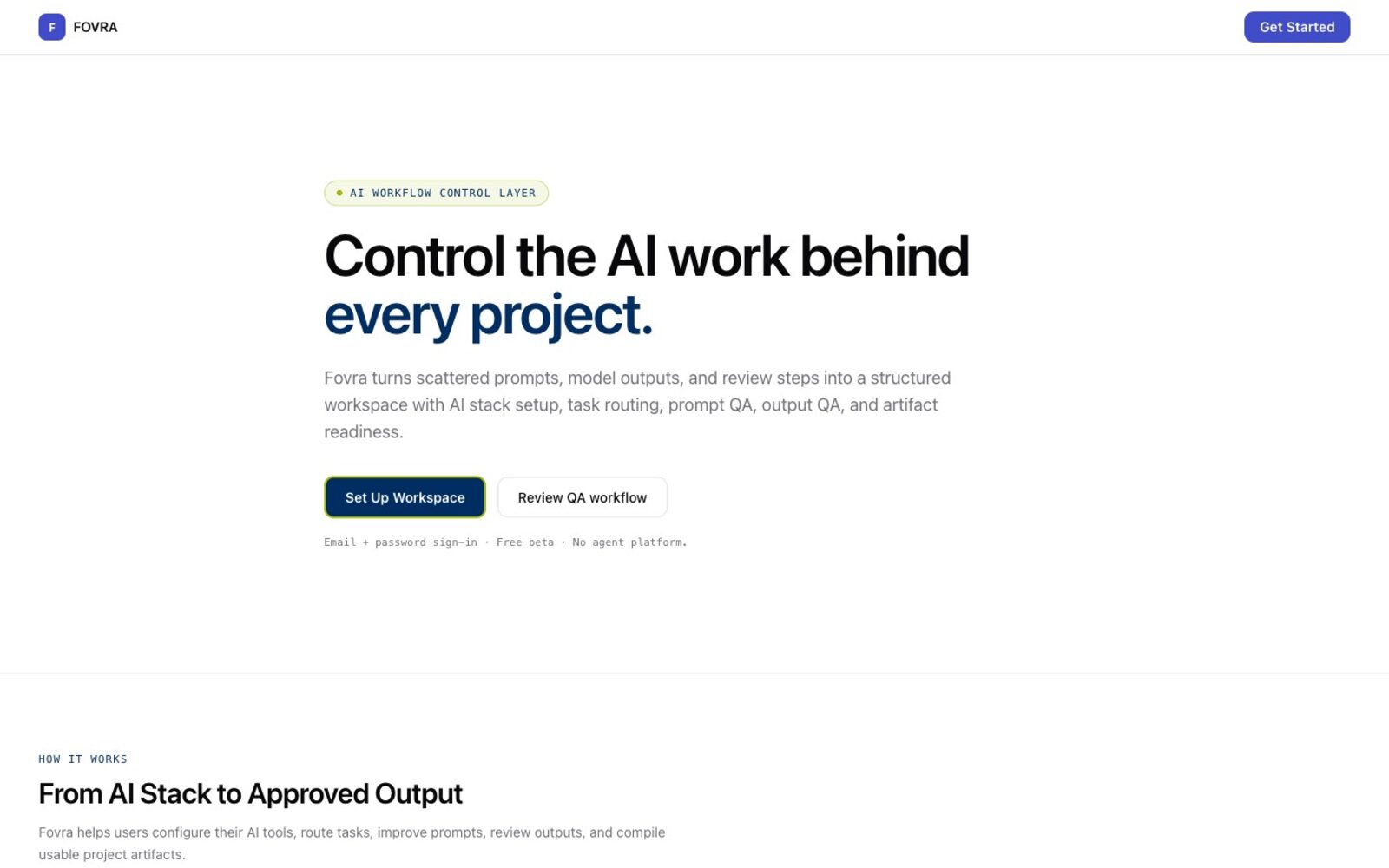
FOVRA

An AI workflow and QA system that makes AI dependable enough for serious, high-stakes work.

Visit FOVRA
◆ Problem

One chatbot answer isn't good enough for real work.

People use one model, one prompt, one pass, then trust the output. For anything that matters, that's fragile. Weak assumptions go unchallenged, the wrong model gets the wrong job, and nothing catches what's confidently wrong.

◆ Insight

Quality comes from structure, not a better prompt.

Serious thinking separates research, writing, critique, and review into stages, each with the right tool and a check on the last. AI should work the same way. What sets it apart isn't generation, it's the QA layer.

◆ Solution

Structured workflows with a built-in critique-and-QA layer.

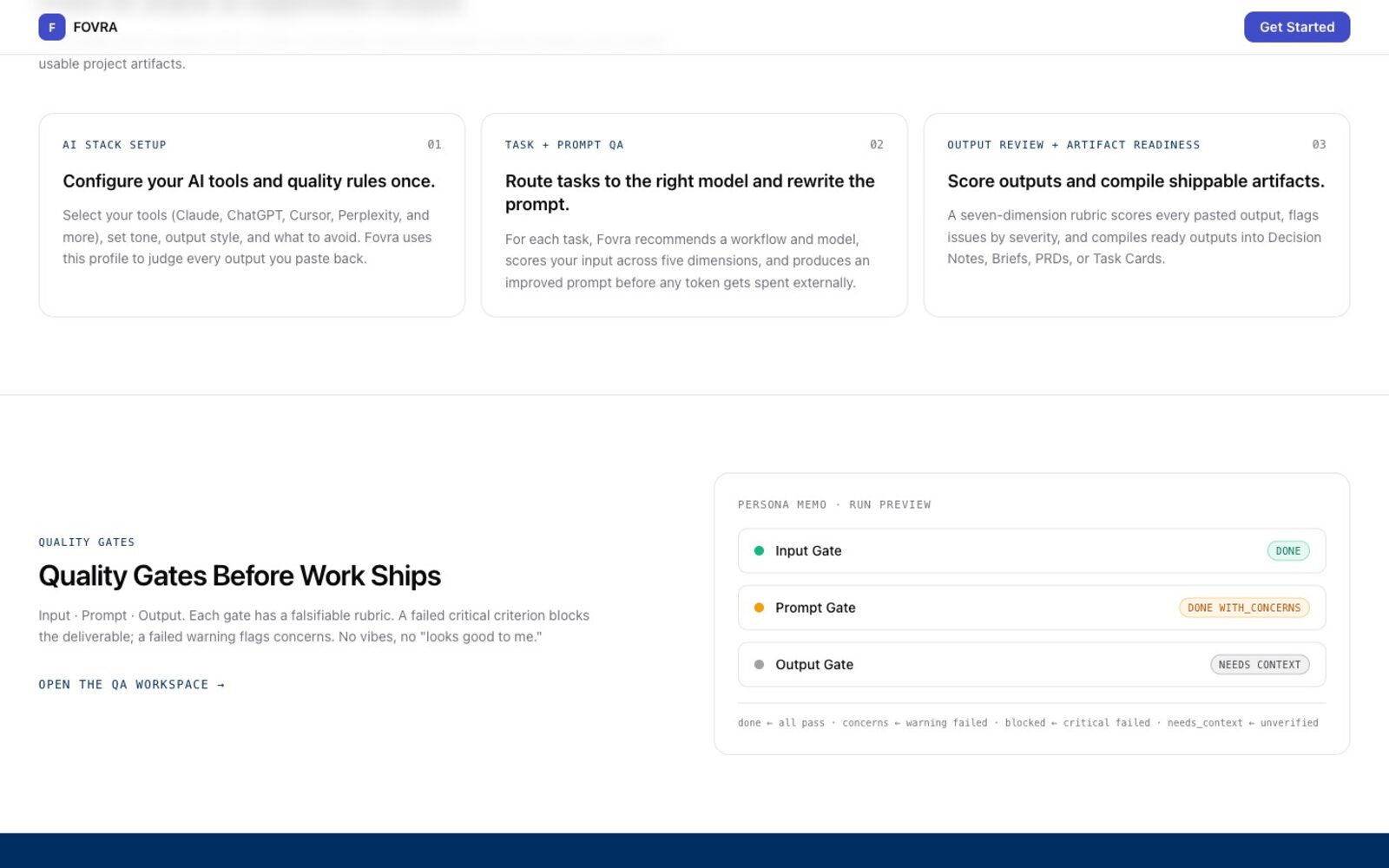
FOVRA breaks AI work into routed stages (research, writing, critique, refinement, and final QA) instead of one long chat. It helps users pick the right model for each stage, challenge weak assumptions, and review every output before it's trusted.

◆ What it does
  • Stage-separated workflows. Research, writing, critique, refinement, and QA as distinct steps.
  • Model selection and routing. Match each stage to the model best suited for it, by role rather than brand.
  • Output pressure-testing. Structured critique that surfaces weak assumptions before they ship.
  • Built-in QA layer. A review gate that treats quality control as the main feature.
  • Human judgment at the center. AI handles the heavy work, the person keeps control of the final decision.
◆ My Role

Founder & system designer

Set the thesis (structure beats single-shot prompting), designed the stage-based workflow and QA model, and positioned FOVRA away from generic "AI automation" language.

◆ The thinking

Make review the product, not an afterthought.

Everyone is racing to generate faster. I focused on the opposite end of the workflow: the step that decides whether an output can be trusted. Making QA the core feature is what turns FOVRA into a defensible category rather than another AI chat tool.

What this shows

What both products say about how I work.

One is a marketplace, one is AI infrastructure, but they come from the same playbook: find the real problem, design a structured solution, and obsess over what makes it trustworthy.

01

I frame problems, not features

SubletU started from a calendar mismatch; FOVRA from why single-shot AI fails. I lead with the real friction and the assumptions everyone else skips.

02

I think in systems and workflows

Both win on structure: verification and standardization in one, stage-routing and QA in the other. I design the workflow, not just the surface.

03

I treat trust as the strategy

Reviews and verification in SubletU; a dedicated QA layer in FOVRA. I make what earns trust a first-class feature, because that's what makes a product credible.

04

I scope to the wedge

I prioritize the one thing that has to be true for the product to work (trust for SubletU, structured QA for FOVRA) and cut the rest.

05

I position, not just build

I can explain why a product is different in language the buyer actually uses, which keeps FOVRA out of the generic "AI automation" category and SubletU out of "another listings app."

06

I use AI with judgment at the center

I use AI to move fast and think more clearly, routing each task to the right method while keeping a person in control of the final decision.

Let's talk product and strategy.

I'm drawn to roles where framing the problem matters as much as executing the answer. If that's how your team works, I'd love to connect.